
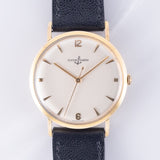
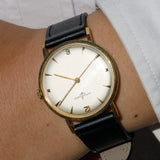






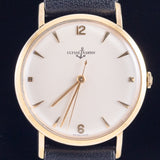

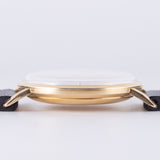



This is a dress watch produced by Ulysse Nardin in the 1960s. The thickly layered gold-filled case exhibits a texture and subdued glow reminiscent of solid gold. The dial is finished in a classic electroplated white, featuring a well-balanced arrangement of wedge, square, and Arabic numeral hour markers. The absence of a minute track contributes to a clean, uncluttered aesthetic. Slim pencil hands are used for the hours and minutes, while the seconds hand with a tail dot adds a touch of delicacy. Another noteworthy detail is the anchor emblem—Ulysse Nardin’s symbol—which began appearing on dials during the 1960s.
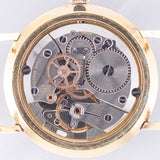
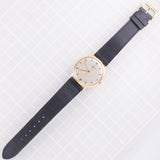
The case remains in good condition with no major damage, and the lug edges flowing smoothly from the case sides are still well defined. The dial shows minimal aging and retains a fresh, clean appearance. Both the hands and indices are in fine condition, with no conspicuous dulling to their polished surfaces. Fully serviced by our watchmaker.
This piece subtly reflects a period of transition, combining a dial design that still carries the spirit of the 1950s with the updated logo identity of the 1960s. Within its restrained simplicity, individuality is expressed through thoughtful finishing and design choices—an approach characteristic of Ulysse Nardin during this era. In the world of vintage watches, value is shaped not only by year and reference but also by design context and historical background, and this watch embodies those qualities in a concise yet compelling way. Understated yet rich in nuance, it is a dress watch that will particularly resonate with discerning enthusiasts.
BRAND
Founded in 1846, Ulysse Nardin was a pioneer in the field of marine chronometers, supplying no fewer than 50 national navies and establishing a near-dominant position in the sector. Building on this legacy, the brand also achieved the status of an ultra-high-end maison in the world of pocket watches, eventually securing a distinctive reputation as a master of complicated timepieces. In recent years, Ulysse Nardin has continued to develop highly practical innovations, including mechanisms that allow the date to be advanced or reversed easily via the crown.